
[China Cable News] Prysmian Group has been awarded a contract worth approximately €850 million by the joint venture Eastern Green Link 1 Limited, established by the UK transmission network owners SP Transmission plc and National Grid Electricity Transmission plc, to provide cable systems for a major grid development project between Scotland and England in the UK.
Earlier this year, Prysmian was selected as the exclusive preferred bidder and subsequently, the Prysmian Group committed to a continuous supply capability.
Eastern Green Link 1 (EGL1) is a crucial transmission line connecting Torness in East Lothian, Scotland, and Hawthorn Pit in County Durham, England. It is also the UK's first contract cable system to use 525 kilovolt high-voltage direct current (HVDC) technology and extruded XLPE insulation. Prysmian will design, manufacture, install, test, and commission the required high-voltage direct current cable system, providing nearly 400 kilometers of power cables for the 194-kilometer route between the two countries, with a transmission capacity of 2 gigawatts. The majority of the line, 176 kilometers, will be installed offshore in the North Sea, with the onshore parts in Scotland and England being approximately 8 kilometers and 10 kilometers, respectively.
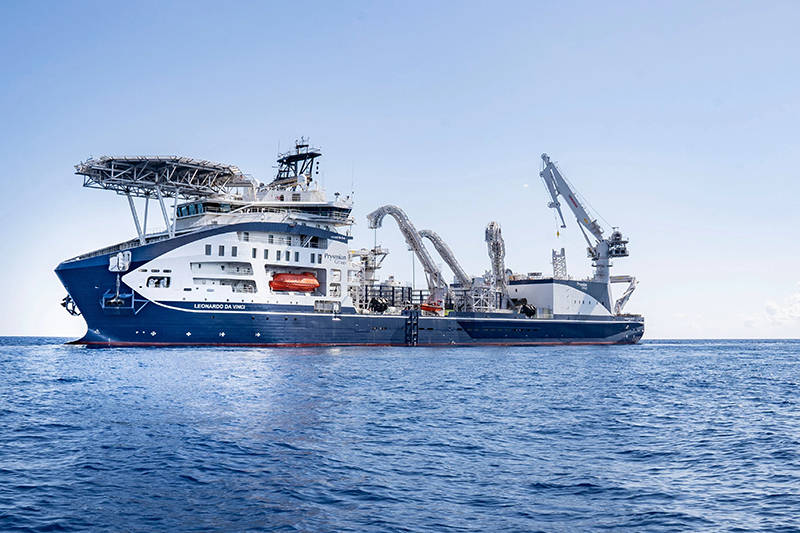
The cables are planned to be manufactured at Prysmian's centers of excellence in Pikkala, Finland (submarine cables), and in Gron and Montereau, France (land cables). Offshore installation activities will utilize Prysmian's 'Da Vinci' class cable-laying vessel. The project is scheduled to be operational by 2028.
Eastern Green Link #1 is one of a series of planned Eastern Green Link system reinforcement projects between the east coast of Scotland and England, which will significantly enhance the capacity and resilience of the existing UK transmission network and promote the growth of renewable energy generation delivered to users. These network developments support the UK government's goals of achieving 50 gigawatts of offshore wind power by 2030 and a net-zero economy by 2050."