
In the era of information explosion, almost everyone needs to access the Internet, and almost every place is equipped with networks and network cables. However, you may not know that although network cables look the same, they actually have different categories. Here, this article will compare the widely used Cat5e cable, Cat6 cable, Cat6a cable, and Cat7 cable on the market to help you choose the right network cable.

I. Cat5 and Cat5e Cables The working principles of Cat5 and Cat5 cables are the same. They both have the same type of RJ-45 plug and can be inserted into any Ethernet socket on a computer, router, or other similar device. The main difference between Cat5 and Cat5 cables lies in their transmission performance. Cat5 cables have an internal separator that can reduce interference or near-end crosstalk (NEXT). Compared with Cat5 cables, it also improves far-end crosstalk (ELFEXT), and its return loss and insertion loss are lower. Therefore, the performance of Cat5 cables is better.

II. Cat6 and Cat6a Cables The working principles of Cat6 and Cat6a cables are the same. They both have the same type of RJ-45 plug and can be inserted into any Ethernet socket on a computer, router, or other similar device. The main difference between Cat6 and Cat6a cables lies in their transmission performance. Cat 6a cables have an internal separator that can reduce interference or near-end crosstalk (NEXT). Compared with Cat6 cables, it also improves far-end crosstalk (ELFEXT), and its return loss and insertion loss are lower. Therefore, the performance of Cat6a cables is better.

III. Cat7 Cables support a frequency bandwidth of up to 600MHz and also support 10GBASE-T Ethernet. In addition, compared with Cat6 and Cat6a cables, Cat7 cables greatly reduce crosstalk noise. The connector of Cat7 cable is special, its connector type is GigaGate45 (CG45).
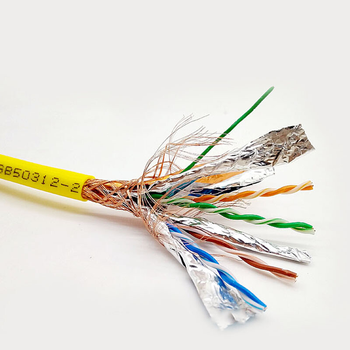
IV. Cat8 Cables In the ISO / IEC-11801 standard, Cat8 cables are divided into Class I and Class II according to the channel level. The shielding type of Class I Cat8 cable is U/FTP and F/UTP, which can be backward compatible with the RJ45 connector interface of Cat5e, Cat6, Cat6a; the shielding type of Class II Cat8 cable is F/FTP or S/FTP, which can be backward compatible with TERA or GG45 connector interface.
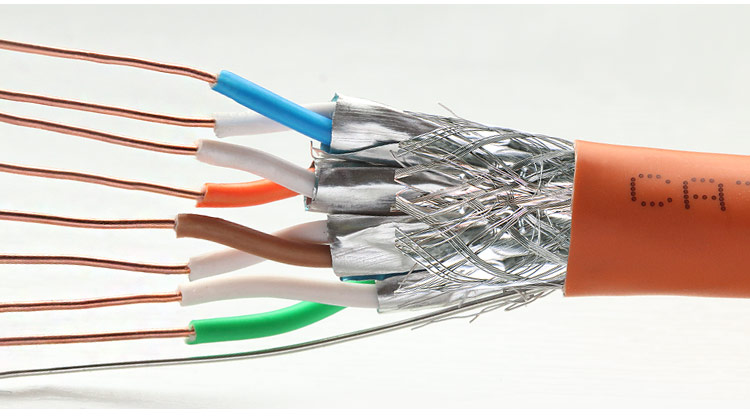
Conclusion This article summarizes the differences in performance, transmission speed, and frequency bandwidth of Cat5, Cat6, Cat6a, Cat7, and Cat8 cables. They all have different characteristics and applications. If you are considering installing network cables, please consider these factors to make the right choice.